

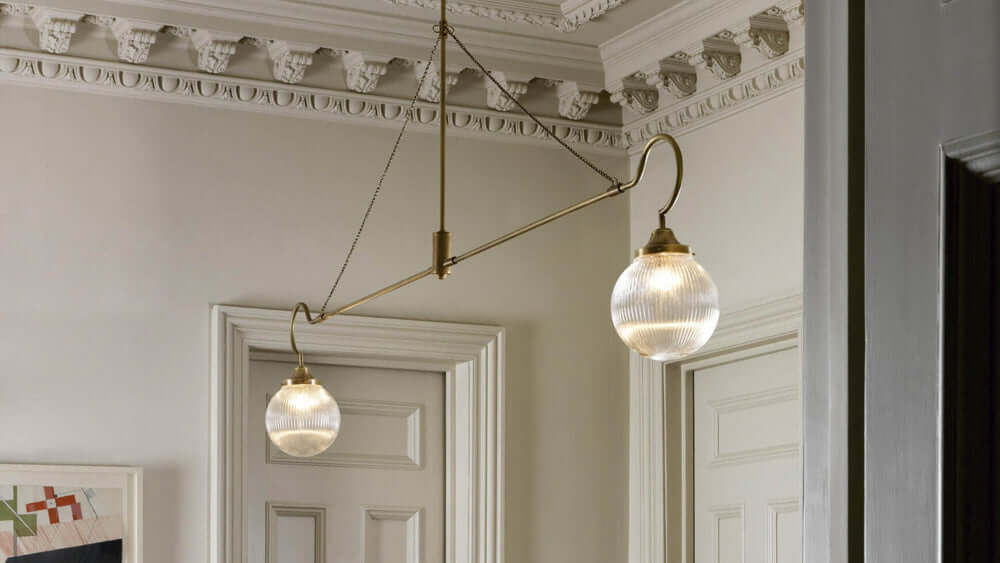
Statement Lighting: What Every Discerning Home Owner Must Know
Statement Lighting: What Every Discerning Home Owner Must Know
A chandelier arrives. It is extraordinary — honed alabaster, brass fittings, the kind of piece that stops conversation in a room. And then, in the rush of installation, a critical question goes unasked: can the ceiling actually bear it?
Weight distribution in statement lighting installation is one of those subjects that sits quietly behind the glamour of the finished result. Yet it is precisely the difference between a room that performs flawlessly for decades and one that causes expensive, avoidable problems. For anyone commissioning premium British-made lighting — the kind of piece that is genuinely built to outlast the trends it inspires — understanding the structural principles involved is not merely useful. It is essential.
Why Statement Lighting Carries More Than Its Apparent Weight
A conventional light fitting might weigh a kilogram or two. Statement pieces are an entirely different matter. Consider the CTO Lighting Avalon Triple Chandelier (from £36,266), which incorporates honed alabaster with brass and bronze construction. Natural stone is dense. Metalwork at this calibre is substantial. The combined weight of such a fixture, before accounting for the electrical housing and ceiling rose assembly, can reach figures that demand professional structural assessment before a single fixing is placed.
This is not cause for hesitation — it is cause for proper planning. The most considered interiors are always the most prepared ones.
The key principle here is the distinction between static load and dynamic load. Static load refers to the dead weight of the fitting hanging at rest. Dynamic load accounts for movement — vibration from doors, footfall on upper floors, even the subtle sway that large pendants can introduce over time. Both must be factored into any installation assessment.
Ceiling Joist Location and Fixing Strategy
The single most important step before installing any significant lighting piece is locating the ceiling joists. Plasterboard alone will not support meaningful weight. A pendant cluster or chandelier must be anchored either directly into a joist or through a correctly specified spreader plate that distributes the load across multiple structural points.
For suspended ceilings or older British properties with lath-and-plaster construction, the approach differs again. These buildings — frequently the settings where our clients are furnishing rooms of considerable period character — require specialist fixings and, in some cases, consultation with a structural engineer before work commences.
The Roma Pendant Light by CTO Lighting (£3,478), featuring alabaster with bronze or satin brass, is an excellent example of a piece where installation method must be considered from the very first conversation with your electrician or interior contractor. The alabaster diffuser alone contributes meaningful weight, and the beauty of the fitting depends entirely on it hanging perfectly level and secure.
The Role of the Ceiling Rose
A ceiling rose is far more than a decorative finish. In statement lighting installations, it serves as the primary interface between the fitting and the ceiling structure. The rose must be correctly sized and fixed to distribute load away from the central point of attachment — concentrating all weight at a single anchor is one of the most common errors made even by experienced tradespeople working outside their usual scope.
For multi-arm configurations such as the CTO Lighting IVY Pendant Vertical 4 Light (£6,629), the ceiling rose assembly is engineered as part of the system. Deviating from the manufacturer's specified hardware undermines the entire load distribution design. When investing in British-made lighting of this calibre, working with the installation specifications as provided is not optional — it is the foundation of long-term integrity.
Drop Length and Pendulum Effect
Height is often considered purely in aesthetic terms: how far should the pendant hang above the dining table, the stairwell, the entrance hall? These are valid considerations, but drop length also has structural implications.
A longer drop increases the lever effect on the ceiling fixing. A pendant hanging three metres introduces significantly more rotational stress on its mounting point than the same fitting at one metre. This is particularly relevant for pieces incorporating heavy materials. The CTO Lighting Roc Table Light (£4,044) with its honed travertine base demonstrates how premium natural stone materials — chosen for their beauty and longevity — bring a weight consideration that informs every aspect of placement and support.
For pendant clusters such as the Mezzo Pendant Cluster (from £878), each individual drop point must also be assessed independently. A cluster installation is not simply one heavy fitting; it is multiple load points requiring coordinated structural planning across a broader ceiling area.
Commissioning the Right Professional
The appropriate professional for statement lighting installation is not necessarily a general electrician, though a certified electrician must always complete the electrical connection. For pieces of significant weight, the conversation should begin with an interior architect or specialist lighting installer who understands both the structural requirements and the design intent.
Reputable suppliers of premium lighting will provide detailed installation specifications. Working to those documents protects the investment, the property, and everyone within it.
At Eb London, every piece we supply — from CTO Lighting's finest chandeliers to more understated wall and table lights — is sourced with the full understanding that our clients are making long-term investments in their interiors. We are always available to discuss installation considerations alongside the selection process itself, because the two are inseparable when the standard expected is genuinely exceptional.
Protecting a Long-Term Investment
Statement lighting is not a purchase that is replaced every few years. The pieces we curate are designed to be permanent fixtures — sometimes literally — within homes of discernment. That longevity depends as much on how they are installed as on the craftsmanship that went into making them.
British makers such as CTO Lighting engineer their products with precision. Honouring that precision through correct installation is simply the continuation of the same commitment to quality.
If you are considering a significant lighting installation and would like guidance on the pieces best suited to your space and structural context, we welcome the conversation. Browse our full collection of premium British-made lighting at eblondon.com and speak with us directly about your project requirements. A room this carefully considered deserves nothing less.


Leave a comment
This site is protected by hCaptcha and the hCaptcha Privacy Policy and Terms of Service apply.